The Moment Trust Breaks
I remember the moment a patient told me, three months after their rear-end collision, that they were afraid to turn their head to check their blind spot while driving. Not because of pain exactly — though there was pain. Because they no longer trusted their own neck.
That word — trust — stopped me. In twenty-five years of practice and over a thousand personal injury cases here in Sonoma County, I've heard patients describe their symptoms in hundreds of ways. Stiffness. Burning. Shooting. Aching. But this was different. They weren't describing a sensation. They were describing a relationship that had broken down.
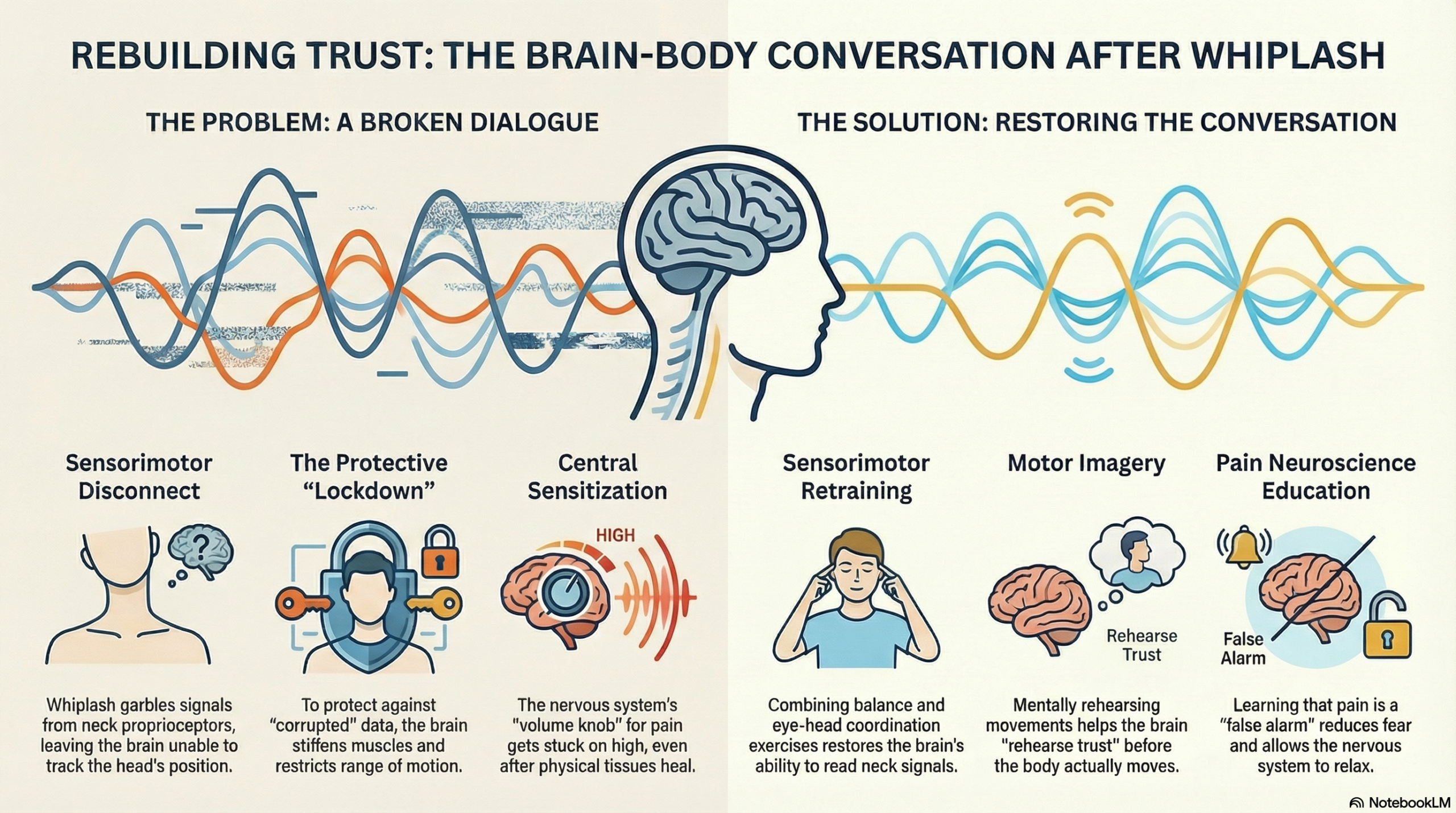
If you're reading this after a whiplash injury, you might recognize something similar. Maybe you've noticed that your body doesn't move the way it used to — not because something is "broken" in the mechanical sense, but because the conversation between your brain and your body has gone quiet. Or worse, it's become an argument.
That conversation — the constant, unconscious dialogue between your nervous system and your muscles, joints, and ligaments — is what clinicians call sensorimotor control. And rebuilding it is, I believe, the most underappreciated aspect of whiplash recovery.
When the Conversation Goes Silent
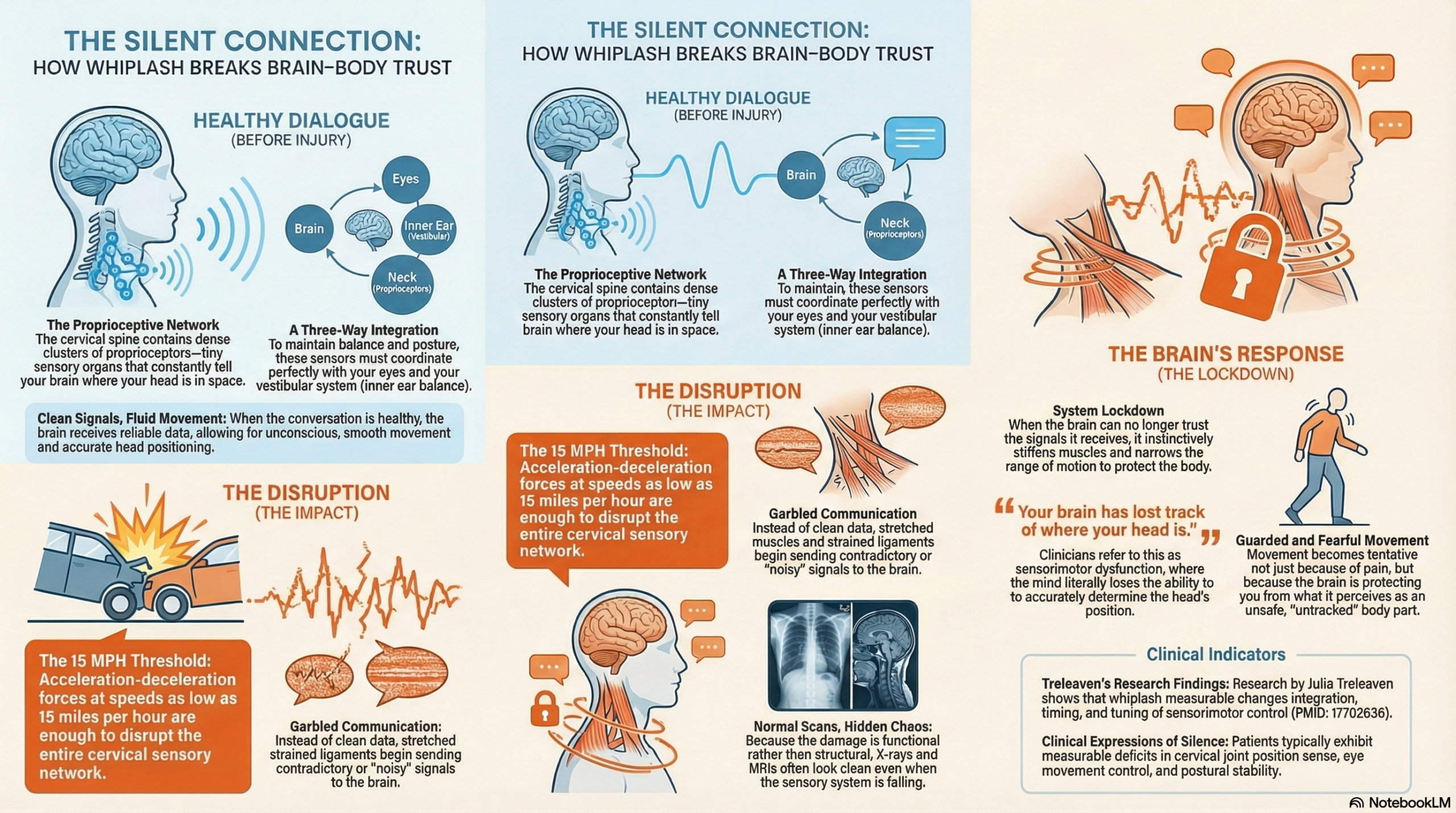
Here's what most people don't realize about a whiplash injury: the damage isn't always structural. Your X-rays may look normal. Your MRI may be clean. But something has changed.
Your cervical spine — the neck — is one of the most neurologically rich areas in your entire body. It contains dense clusters of proprioceptors, tiny sensory organs embedded in muscles and ligaments that constantly tell your brain where your head is in space. They coordinate with your eyes. They talk to your vestibular system — the balance apparatus in your inner ear. They inform every posture, every reach, every step you take.
When a whiplash event occurs — even at speeds as low as 15 miles per hour — the sudden acceleration-deceleration forces don't just stretch muscles and strain ligaments. They disrupt this entire sensory network. The proprioceptors that once sent clean, reliable signals begin sending garbled ones. Your brain, which depends on that information to coordinate movement safely, starts receiving contradictory messages.
And when the brain can't trust the signals it's getting, it does what any intelligent system would do: it locks down. Muscles stiffen. Range of motion narrows. Movement becomes guarded, tentative, fearful. Your body is protecting you — but it's protecting you from yourself.
Julia Treleaven, one of the leading researchers in cervical sensorimotor dysfunction, has documented how whiplash injuries alter afferent input from cervical receptors, subsequently changing the integration, timing, and tuning of sensorimotor control (PMID: 17702636). Patients exhibit measurable changes in cervical joint position sense, eye movement control, and postural stability. The clinical expression is straightforward: patients can no longer accurately determine the position of their own heads.
Think about that for a moment. Your brain has lost track of where your head is.
The body speaks a language the mind doesn't always understand. After whiplash, that language becomes garbled — and rehabilitation means learning to translate again.
The Science of Broken Trust
To understand why this matters so profoundly for recovery, we need to understand what happens when the nervous system decides that the body is no longer safe.
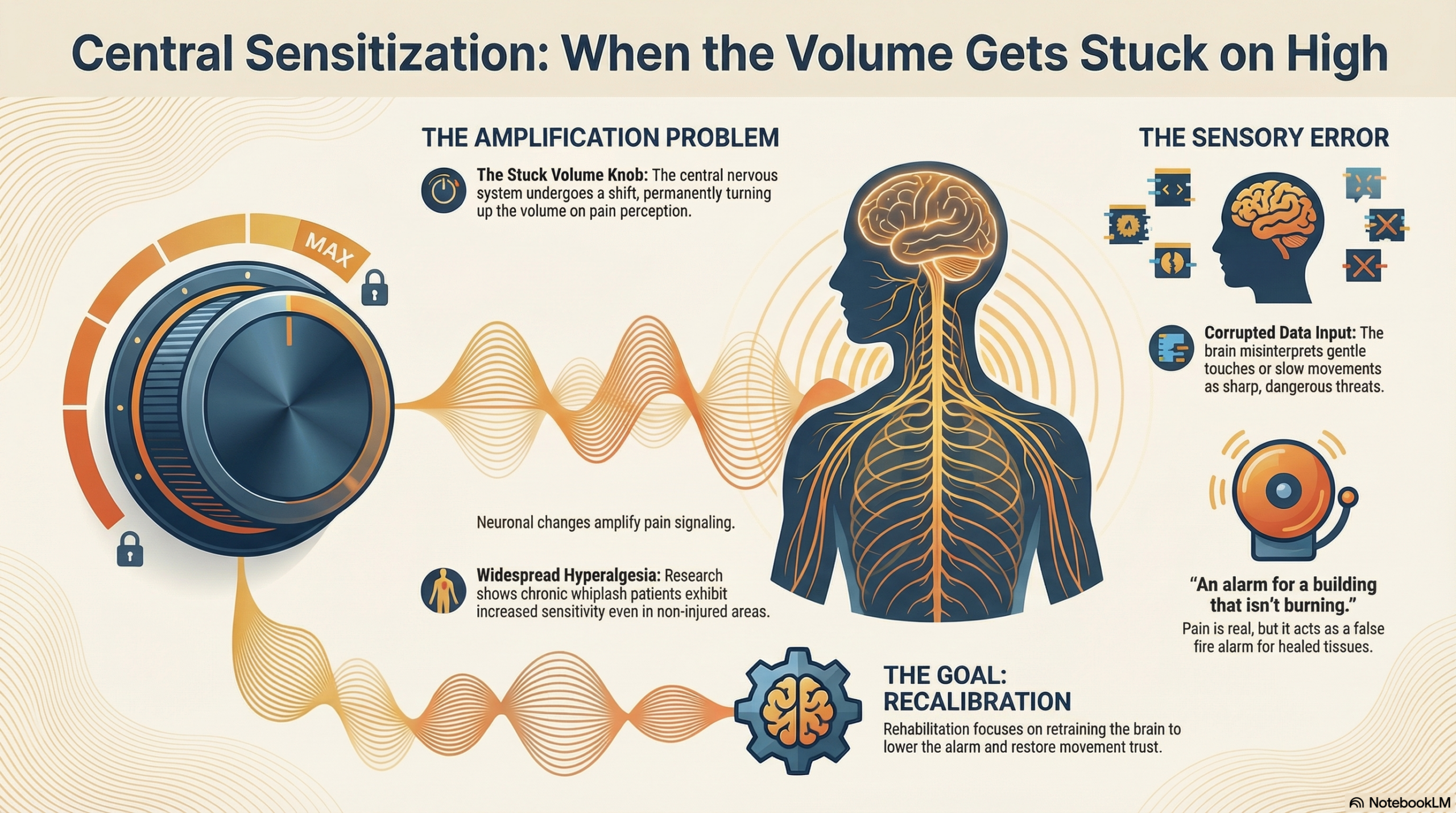
Central Sensitization: When the Volume Gets Stuck on High
After a whiplash injury, the nervous system doesn't simply register damage and then return to baseline. In many patients — particularly those who develop chronic symptoms — the central nervous system undergoes a fundamental shift. It becomes sensitized.
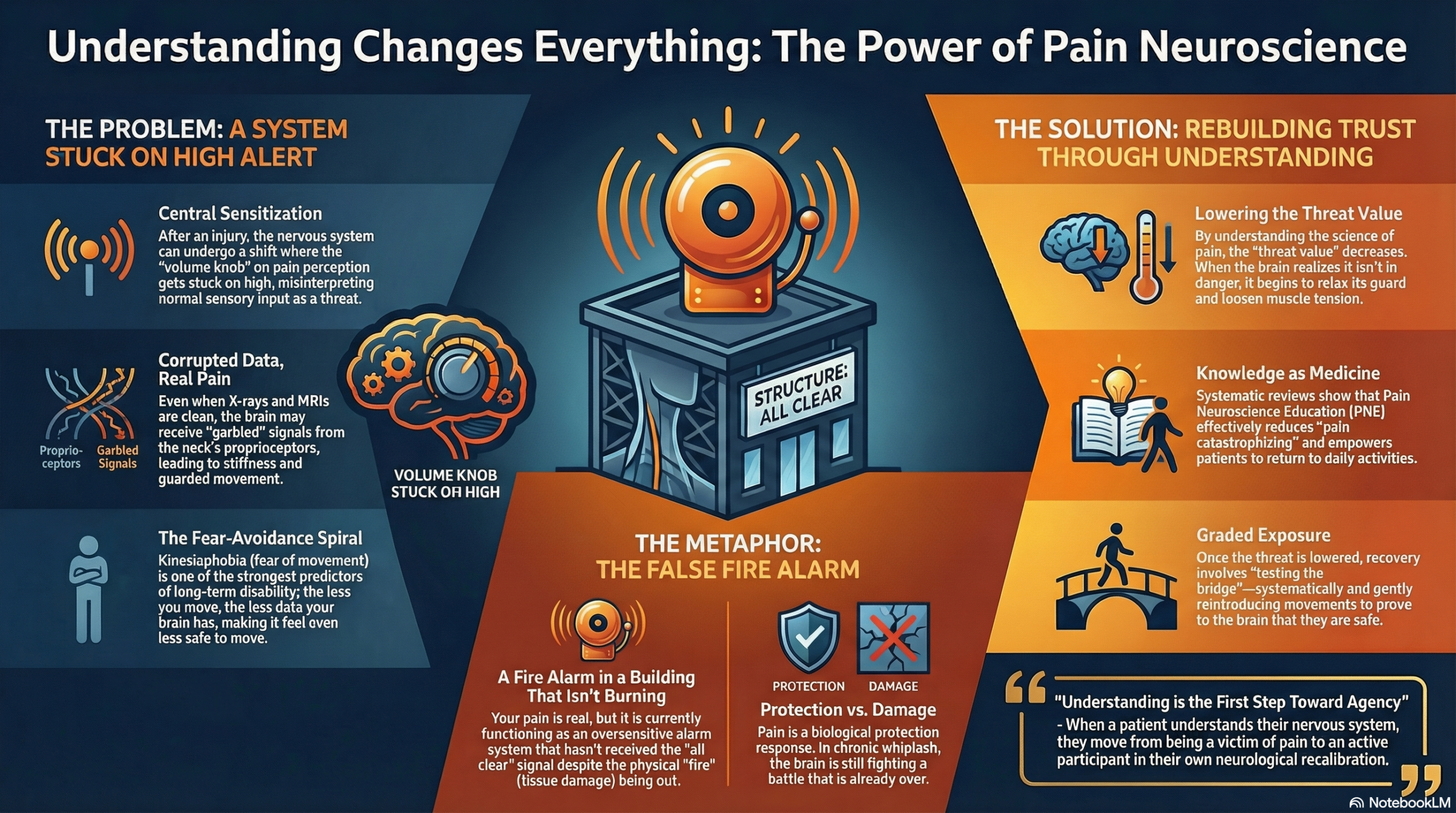
Van Oosterwijck and colleagues conducted a systematic review in 2013, examining 24 studies that met rigorous methodological criteria (PMID: 23008191). Their findings were unambiguous: chronic whiplash patients exhibit "persistent pain complaints, local and widespread hyperalgesia, referred pain, allodynia, decreased spinal reflex thresholds, inefficient diffuse noxious inhibitory controls activation, and enhanced temporal summation of pain." In plain language, the volume knob on pain perception gets turned up — and it stays there.
Curatolo, Arendt-Nielsen, and Petersen-Felix described this even more precisely in their 2004 review (PMID: 15502692): tissue damage produces plasticity changes at different neuronal structures responsible for amplifying nociception — pain signaling — and some of these changes can become self-sustaining. Central hypersensitivity may explain why patients continue to experience significant pain even when their tissues have largely healed.
This isn't imaginary pain. It's the nervous system genuinely misinterpreting normal sensory input as threatening. A gentle touch feels sharp. A slow turn of the head triggers alarm. The brain is trying to protect the body, but it's working with corrupted data.
Fear-Avoidance: When Protection Becomes a Prison
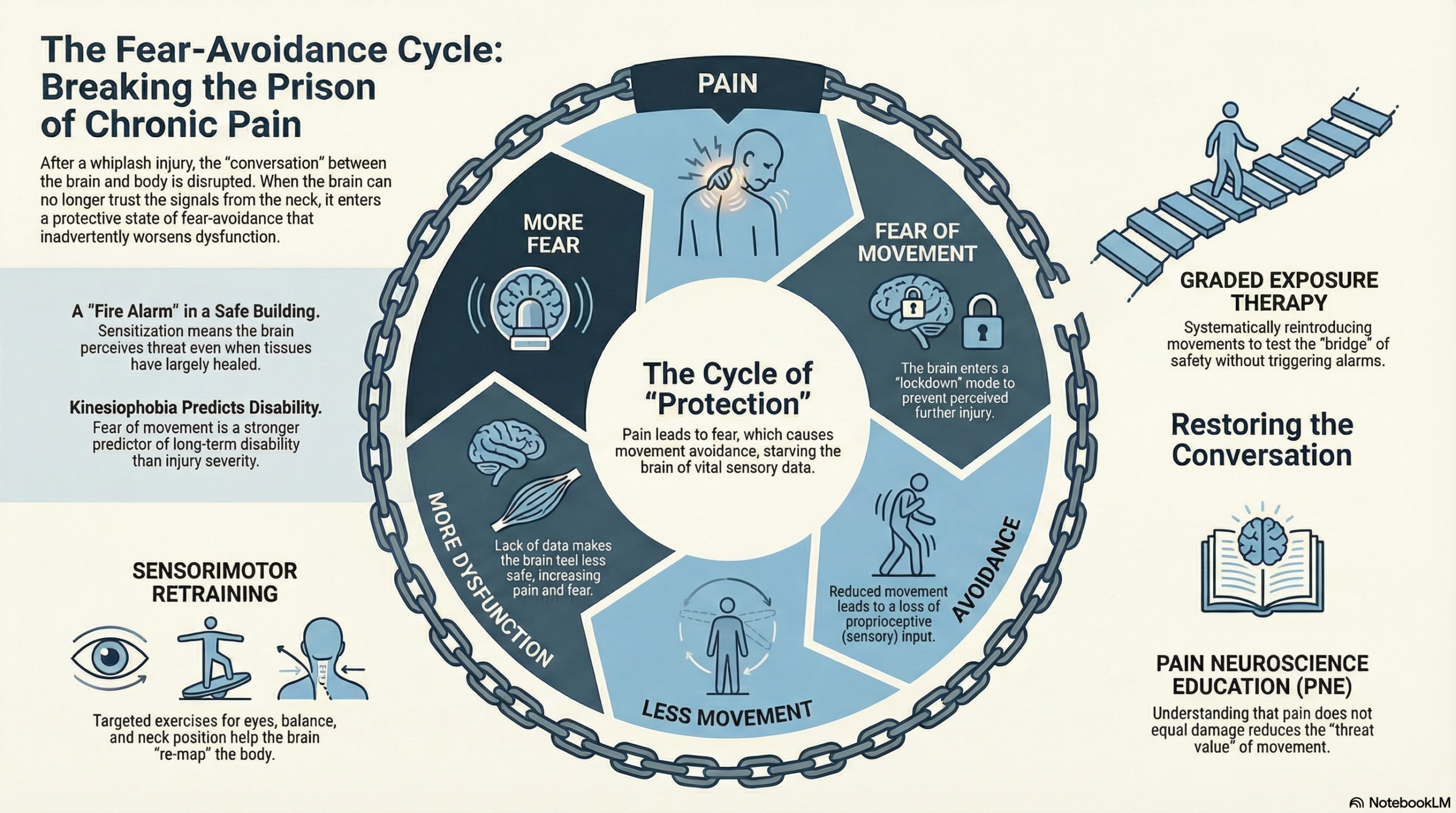
Here's where the cycle becomes self-reinforcing. When movement hurts — or when your brain expects it to hurt — you stop moving. This is called fear-avoidance behavior, and research has shown that kinesiophobia (fear of movement) is one of the strongest predictors of long-term disability after whiplash.
The Tampa Scale of Kinesiophobia, one of the most widely used research instruments in this field, has demonstrated that higher fear-of-movement scores in whiplash patients correlate with longer symptom duration, greater disability, and reduced range of motion (PMID: 22191022). It's not the severity of the initial injury that determines how well you recover. It's how afraid you become of your own body.
And here's the tragedy: the avoidance itself makes things worse. When you stop moving, you lose proprioceptive input. Without proprioceptive input, the brain loses even more ability to track what the body is doing. Which makes movement feel even less safe. Which makes you avoid it even more.
Trust erodes in a spiral. And breaking that spiral requires deliberate, guided intervention.
The Evidence: What Actually Rebuilds the Conversation
If the problem is a broken conversation between brain and body, then the solution isn't just strengthening muscles or stretching tight tissues. It's restoring communication. Here's what the research tells us about how to do that.
Sensorimotor Rehabilitation: Teaching the Brain to Listen Again
A landmark randomized controlled trial by Karlsson and colleagues (2022) studied 152 neck pain patients divided into four groups receiving different combinations of local neck treatment, joint position sense/oculomotor exercises, and balance exercises (PMID: 36414518). The results were striking: while all groups improved, the patients who received combined sensorimotor training — joint position sense exercises, oculomotor exercises, and balance work added to standard manual therapy — showed the greatest improvements in proprioceptive accuracy and maintained those gains at 6- and 12-month follow-ups.
This is a critical finding. It tells us that standard treatment alone — manual therapy, general exercise — isn't enough to rebuild the sensorimotor system. You need targeted exercises that specifically retrain the brain's ability to read signals from the neck.
Motor Imagery: Rehearsing Trust Before You Move
One of the more fascinating developments in rehabilitation science is the use of motor imagery — mentally rehearsing movements without physically performing them. Beltran-Alacreu and colleagues (2015) conducted a randomized controlled trial showing that combining motor imagery with motor control exercises produced significantly greater improvements in cervical sensorimotor function compared to motor control exercises alone (PMID: 26618067).
Why would imagining movement help? Because the brain doesn't fully distinguish between performed and imagined actions. The same neural pathways activate. Motor imagery allows patients to begin rebuilding trust in movement before they actually move — reducing fear, priming neural circuits, and creating a template for safe action.
For a whiplash patient who is terrified of turning their head, this is profound. You can begin the conversation with your brain before your neck joins in.
Pain Neuroscience Education: Understanding Changes Everything
If fear of movement is one of the primary barriers to recovery, then understanding why you hurt is one of the most powerful medicines available.
Pain neuroscience education (PNE) is an approach that teaches patients how their nervous system processes pain, why sensitization occurs, and why pain does not necessarily equal damage. Systematic reviews have consistently shown that PNE reduces pain catastrophizing, kinesiophobia, and fear-avoidance beliefs — often with clinically meaningful effect sizes.
The mechanism is elegant in its simplicity: when a patient understands that their pain is a protection response from an oversensitized nervous system rather than evidence of ongoing tissue destruction, the threat value of pain decreases. And when threat decreases, the nervous system begins to relax its guard. Movement becomes less terrifying. Trust begins to return.
I tell my patients: your pain is real. But it's a fire alarm going off in a building that isn't burning. Our job together is to help your brain recalibrate the alarm.
Mindfulness and Motor Control: The Quiet Revolution
A comprehensive systematic review and meta-analysis by Arrieta-Oliva and colleagues (2023) examined resistance, motor control, and mindfulness-based exercises for chronic nonspecific neck pain (PMID: 37339388). They found that all three approaches were effective for reducing pain, but motor control exercises showed dose-dependent effects — higher frequencies and longer durations produced larger improvements in both pain and disability.
What struck me about this research was the inclusion of mindfulness-based exercise as a standalone category with demonstrated efficacy. Mindfulness isn't just stress reduction. In the context of rehabilitation, it's a way of paying conscious attention to bodily sensations without judgment or fear. It's the practice of noticing what your body is telling you and choosing to stay present with that information rather than retreating from it.
That, to me, is the definition of rebuilding trust.
Exercise Therapy: The Foundation
Muñoz-García and colleagues (2021) conducted a systematic review and meta-analysis of exercise therapy for whiplash-associated disorders, confirming that exercise-based interventions produce significant improvements in pain and disability compared to controls (PMID: 34561976). But the type of exercise matters. Passive approaches — lying on a table, receiving treatment — have their place. But they don't rebuild the active conversation between brain and body. That requires the patient to move, to explore their range, to test the edges of what feels safe and gradually expand them.
This is what clinicians call graded exposure: systematically and gently reintroducing movements that the nervous system has flagged as dangerous. Not pushing through pain. Not ignoring the body's signals. But respectfully testing them, the way you might test a bridge by placing one foot on it before committing your weight.
The Deeper Science: Why Trust Is a Biological Process
Everything I've described — sensorimotor retraining, motor imagery, pain education, graded exposure — converges on a single biological reality: neuroplasticity.
Your brain is not a fixed circuit board. It rewires itself constantly based on experience. After a whiplash injury, the brain rewires toward protection: amplifying pain signals, restricting movement, heightening vigilance. This is adaptive in the short term — it prevents you from injuring yourself further while tissues heal.
But if the protective wiring persists after tissues have recovered, it becomes maladaptive. The brain is still fighting a battle that's already over. Chronic whiplash isn't a failure of tissue healing. It's a failure of the nervous system to update its threat assessment.
Rehabilitation, then, is fundamentally a process of neuroplastic change. Every time a patient performs a proprioceptive exercise and the brain receives accurate feedback, the sensorimotor map gets a little clearer. Every time a patient practices motor imagery, the neural pathways for safe movement get a little stronger. Every time a patient learns that a movement isn't dangerous — through education, through experience, through the gradual accumulation of non-threatening inputs — the threat model gets a little less rigid.
Trust, in this context, isn't a metaphor. It's a measurable change in how the nervous system processes information. And it's the most important outcome we can pursue.
Trust isn't a feeling. It's a neural event — the moment your brain decides that a movement is safe enough to allow.
What a Session Looks Like: Rebuilding Trust, Step by Step
When a whiplash patient comes into my clinic, the first thing I do is listen. Not just to their symptoms, but to their story. How has this injury changed their daily life? What movements do they avoid? What are they afraid of?
Then I explain what's happening. I draw it out — the proprioceptive system, the pain amplification cycle, the fear-avoidance loop. I want them to see their situation clearly, because understanding is the first step toward agency.
A typical session might include:
- Manual therapy: to address specific joint restrictions and tissue tension. This isn't passive — it's strategic. By restoring mobility to cervical segments that have become restricted, we give the proprioceptors in those joints the opportunity to send clearer signals.
- Joint position sense exercises: These are deceptively simple. I might ask a patient to close their eyes, turn their head to a specific position, return to center, and then try to find that same position again. The gap between where they think their head is and where it actually is tells us how much proprioceptive accuracy has been lost. Over time, that gap narrows.
- Oculomotor exercises: Eye movement and head movement are intimately linked through the vestibulo-ocular reflex. When cervical proprioception is disrupted, eye tracking often suffers too — contributing to dizziness, difficulty reading, and that unsettling sense of being "off." Specific eye-head coordination exercises help recalibrate this system.
- Balance training: Standing on unstable surfaces, performing head turns while maintaining balance, progressing from eyes-open to eyes-closed conditions. Each challenge asks the nervous system to integrate proprioceptive, visual, and vestibular information — exactly the integration that whiplash disrupts.
- Graded movement exposure: We identify the movements the patient fears most and approach them gradually, building confidence through small successes. Turn five degrees today. Seven tomorrow. Ten the day after. Each painless repetition is data that updates the brain's threat model.
- Motor imagery: Before attempting challenging movements, we rehearse them mentally. I guide the patient through visualizing a smooth, controlled head turn — feeling the muscles engage, seeing the room pan past their field of vision. The brain prepares. And when the actual movement comes, it feels less foreign.
- Education: Throughout every session, I'm explaining what we're doing and why. Not lecturing. Sharing. Because the more a patient understands their own nervous system, the more agency they have over their recovery.
The Therapeutic Alliance: Trust Between Two People
There's one more dimension of trust that the research has made impossible to ignore: the trust between patient and clinician.
Fuentes and colleagues demonstrated that the therapeutic alliance between physical therapists and patients significantly predicts outcomes in chronic low back pain (PMID: 23139428). Alonso-Pérez and colleagues (2024) found strong correlations between trust scores and therapeutic alliance measures — 0.747 post-initial visit and 0.801 at discharge — in patients with chronic low back pain (PMID: 38578206). Hall and colleagues' systematic review confirmed that the therapist-patient relationship is positively associated with treatment adherence, symptom reduction, and physical function (PMID: 20576715).
This isn't soft science. This is the finding that the relationship itself is therapeutic.
When a patient trusts their clinician — trusts that they're being heard, that their pain is being taken seriously, that the plan is designed for their specific situation — something shifts physiologically. The nervous system's threat level decreases. Pain tolerance increases. The patient becomes more willing to explore movement, to tolerate discomfort, to take the small risks that recovery requires.
I think about this every time I meet a new patient. The trust between brain and body isn't separate from the trust between patient and clinician. They're part of the same healing ecology.
You Are Not Broken
If you're recovering from a whiplash injury and you feel like your body has betrayed you — like it moves wrong, hurts for no reason, can't be relied upon — I want you to know something.
You are not broken. Your nervous system is doing exactly what it was designed to do: protect you. The problem isn't that the system is malfunctioning. It's that it hasn't received the information it needs to stand down.
Healing after whiplash isn't always about erasing pain. Sometimes it's about restoring a conversation — the constant, unconscious dialogue between your brain and your body that allows you to move through the world with confidence. That conversation got disrupted. But with the right guidance, the right exercises, the right understanding, it can be rebuilt.
Trust is rehabilitation's hidden metric. It can't be seen on an X-ray. It doesn't show up on an MRI. But when it returns — when a patient turns their head freely for the first time in months, when they check their blind spot without bracing, when they reach for something overhead without flinching — that's when I know we've done our real work.
If this resonates with you, I'd encourage you to seek a guided evaluation from a clinician who understands the sensorimotor dimensions of whiplash recovery. At adjust.clinic, that's what we do.
Recovery is possible. And it begins with rebuilding trust.
Warning
While most whiplash injuries respond well to conservative rehabilitation, certain symptoms require immediate medical evaluation:
- Severe, worsening headache that doesn't respond to medication
- Numbness, tingling, or weakness spreading into both arms or legs
- Difficulty with bladder or bowel control
- Difficulty swallowing or speaking
- Loss of consciousness or significant cognitive changes
- Sudden onset of severe dizziness or visual disturbances
If you experience any of these symptoms after a collision, seek emergency medical care immediately.
References
- Van Oosterwijck J, Nijs J, Meeus M, Paul L. Evidence for central sensitization in chronic whiplash: a systematic literature review. Eur J Pain. 2013;17(3):299-312. PMID: 23008191
- Curatolo M, Arendt-Nielsen L, Petersen-Felix S. Evidence, mechanisms, and clinical implications of central hypersensitivity in chronic pain after whiplash injury. Clin J Pain. 2004;20(6):469-476. PMID: 15502692
- Uremović M et al. Impairment of proprioception after whiplash injury. Coll Antropol. 2007;31(3):823-827. PMID: 18041395
- Treleaven J. Sensorimotor disturbances in neck disorders affecting postural stability, head and eye movement control. Man Ther. 2008;13(1):2-11. PMID: 17702636
- Karlsson A et al. Effectiveness of adding rehabilitation of cervical related sensorimotor control to manual therapy and exercise for neck pain: a randomized controlled trial. Musculoskelet Sci Pract. 2022;62:102658. PMID: 36414518
- Beltran-Alacreu H et al. Effectiveness of a motor control therapeutic exercise program combined with motor imagery on the sensorimotor function of the cervical spine: a randomized controlled trial. Int J Sports Phys Ther. 2015;10(6):877-892. PMID: 26618067
- Arrieta-Oliva L et al. Resistance, motor control, and mindfulness-based exercises are effective for treating chronic nonspecific neck pain: a systematic review with meta-analysis. J Orthop Sports Phys Ther. 2023;53(8):1-41. PMID: 37339388
- Muñoz-García D et al. Exercise therapy for whiplash-associated disorders: a systematic review and meta-analysis. Clin Rehabil. 2021;35(12):1677-1694. PMID: 34561976
- Fuentes J et al. The therapeutic alliance between clinicians and patients predicts outcome in chronic low back pain. Phys Ther. 2014;94(4):477-489. PMID: 23139428
- Alonso-Pérez JL et al. The correlation of trust as part of the therapeutic alliance in physical therapy. Physiother Theory Pract. 2024;40(5):1019-1028. PMID: 38578206
- Hall AM et al. The influence of the therapist-patient relationship on treatment outcome in physical rehabilitation: a systematic review. Phys Ther. 2010;90(8):1099-1110. PMID: 20576715
- Lundberg M et al. Pain-related fear: a critical review of the related measures. Pain Res Treat. 2011;2011:494196. PMID: 22191022