Chest & Rib Injuries After a Car Accident
A seatbelt can press hard enough in a crash to bruise or break the ribs or breastbone, or injure the rib cartilage. Breathing, coughing and moving can hurt, sometimes for months. Small rib fractures and cartilage injuries often don't show on a standard X-ray.
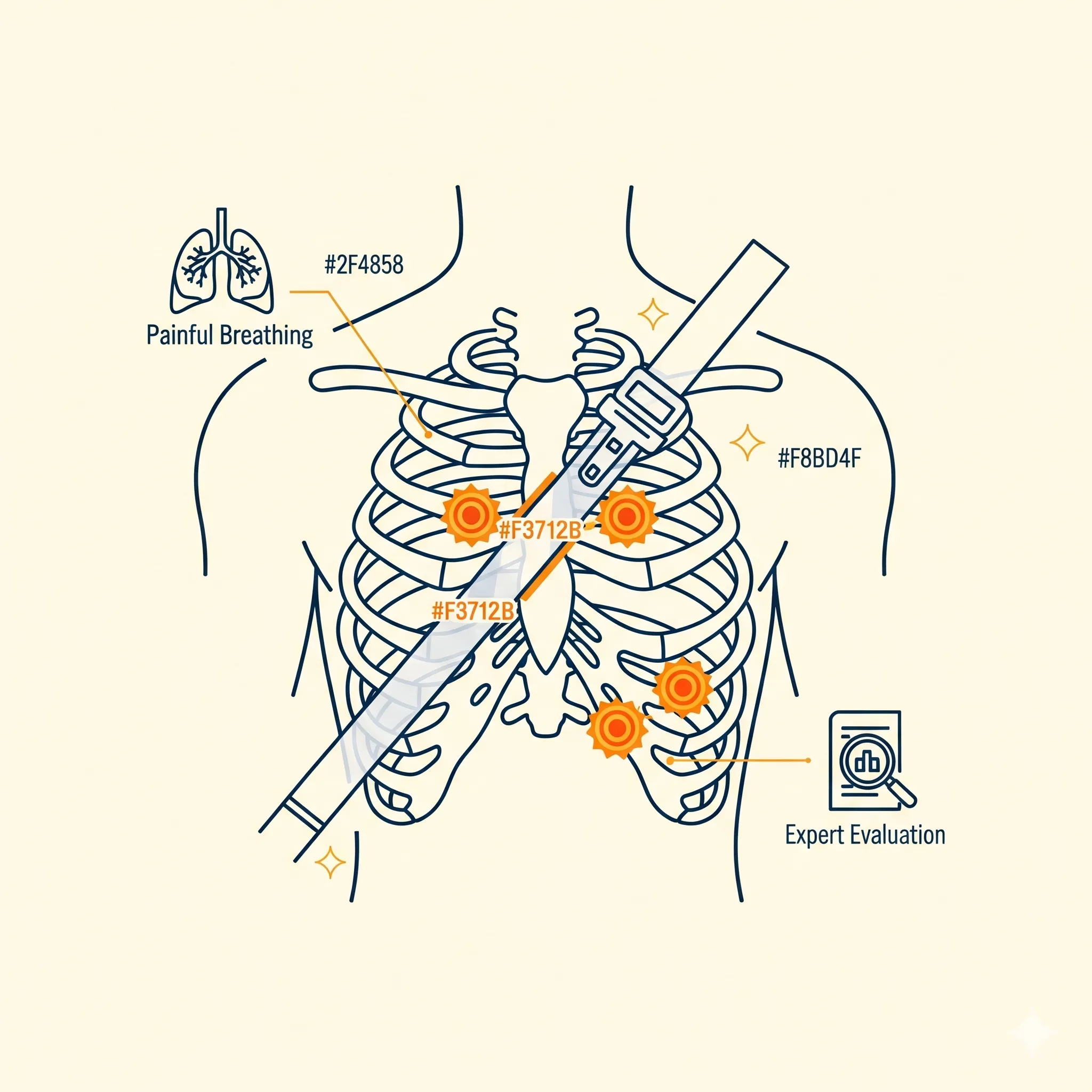
Chest pain after a crash often comes from seatbelt force on the ribs and rib cartilage. It can also mean a broken sternum, a bruised heart or a collapsed lung. Get checked in an emergency room first. Call 911 if breathing gets harder or you cough blood. After the ER clears you, Ryan Lloyd, DC, QME, treats the chest wall in Petaluma.
Go to an emergency room or call 911 if you have:
- Shortness of breath that is getting worse
- Bluish skin or lips, or feeling lightheaded
- Coughing up blood
- Chest pain that is getting worse
- Sharp chest or shoulder pain that worsens when you breathe or cough
- Pain in your belly or shoulder
New or worsening shortness of breath in the two weeks after a crash, especially with a broken rib, needs an ER visit. If an ER has checked you and none of these apply, book an evaluation this week at our Petaluma clinic or call (707) 658-2534.
Sources: NHS, Broken or bruised ribs; MedlinePlus, Collapsed lung; Misthos 2004 (PMID 15082295).
How Seatbelts Cause Injury
In a crash, the shoulder belt holds you in place by pressing across your breastbone, collarbone and ribs. That saves lives, but it can bruise or break those bones. Breastbone fractures happen mostly in car crashes, usually to belted occupants. The same crash can also cause whiplash.
Breathing-Related Pain
Rib pain makes every deep breath, cough or laugh hurt, so it's tempting to breathe shallowly. For older adults, people with several broken ribs, and people with lung conditions, that raises the risk of a chest infection, so regular deep breaths and gentle walking are part of recovery.
Often Missed on Imaging
A standard X-ray can miss small rib fractures, and it doesn't show rib cartilage at all. In one study, two-thirds of the rib fractures seen on CT didn't show on X-ray. So a normal X-ray doesn't rule out an injury, a point that matters for personal injury claims.
Diagnosis
How we diagnose chest & rib injuries
A hands-on exam shows where it hurts and how the injury limits you. Imaging confirms what an exam can't. We document both.
Rib Exam
We check where it hurts along your ribs and how breathing and movement change the pain. These checks can point to an injury, but they can't confirm or rule out a fracture. If we suspect one, we send you for imaging.
Chest Expansion
We measure how far your chest expands with a tape measure and track it across visits. It's a repeatable measurement, though it hasn't been tested in rib injuries, and it doesn't measure how much air you breathe.
Costochondral Junction Exam
We check where the ribs join the cartilage and breastbone. A cartilage injury is usually tender to touch, but so are other chest problems, including some heart problems. Ultrasound or CT can show a cartilage fracture; a hands-on exam can't confirm one.
Movement Testing
We test how twisting, bending and deep breathing affect your pain. That helps us plan your care, but only imaging can tell a muscle strain from a fracture.
Mid-Back Exam
We also examine your mid back and the joints where the ribs meet the spine: where it's sore and how it moves.
Functional Impact Documentation
We record how the injury affects your sleep, breathing, lifting and work, and track your pain on a 0–10 scale at each visit.
Treatment
How we treat chest & rib injuries
Gentle movement and breathing first, more as your pain allows, and hands-on care once serious injury has been ruled out.
Breathing & Movement Exercise
As pain settles, we add breathing exercises and gentle movement for your chest, shoulders and upper back, at a pace your pain allows. In a large trial, a one-size-fits-all early exercise plan didn't reduce pain, so we tailor yours.
Rehabilitation ExercisesVibration Therapy
Standing on the vibration platform adds some activity to the trunk muscles during exercise. It hasn't been studied for rib or chest wall injuries, so it plays only a supporting part in an exercise program, in short, supervised sessions.
Neuromuscular Activation PlatformChiropractic Adjustments
For chest wall pain that a doctor has confirmed isn't from the heart, a trial found chiropractic care, including spinal manipulation, helped more than self-care at 4 and 12 weeks, though not at one year. It hasn't been tested after car crashes. Once a fracture and any heart or lung injury have been ruled out, we use gentle adjustments and mobilization of the mid back and rib joints alongside exercise.
- ✓ Costovertebral joint mobilization
- ✓ Mid-back adjustments
- ✓ Gentle rib mobilization
- ✓ Soft tissue care and breathing exercises
- ✓ Progress rechecked every visit
Our Difference
What makes us different
Chest and rib injuries are easy to underrate because they can look normal on X-ray. We take them seriously and document them carefully.
QME Designation
As a Qualified Medical Evaluator, Ryan Lloyd, DC, QME, provides impairment ratings for chest wall injuries using the AMA Guides, based on your exam, your imaging and your recovery.
Careful Documentation
We record where it hurts, how far your chest expands and how the injury limits your day. Our reports explain that a normal X-ray doesn't rule out a rib, breastbone or cartilage injury, and describe how your injuries fit the way the seatbelt loaded your chest, citing the research.
Movement-Based Approach
Ribs aren't splinted or strapped. Staying gently active, walking and taking regular deep breaths help while they heal, and we add exercise as your pain allows.
Common Questions
Frequently Asked Questions About Chest and Rib Pain After a Car Accident
What causes chest and rib pain after a car accident?
Most often the seatbelt. In a crash, the shoulder belt holds you in place by pressing across your breastbone, collarbone and ribs. That saves lives, but it can bruise or break those bones or injure the rib cartilage. An airbag can also strike the chest.
How do I know if I have a rib fracture or costochondritis?
Both hurt when you breathe, cough or press on the spot, so a hands-on exam can't reliably tell them apart. Costochondritis is inflammation where the ribs join the breastbone; it causes sharp pain at the front of the chest that can feel like heart pain, so chest pain always needs a medical check first. A standard X-ray can miss small rib fractures and doesn't show rib cartilage. CT or ultrasound can find what an X-ray misses, and your medical doctor decides whether you need them.
Can a chiropractor treat rib injuries from a car accident?
Yes, once an emergency room exam or imaging has ruled out a fracture and any lung or heart injury. Care includes mid-back adjustments, soft tissue therapy, and breathing and movement exercises. For chest wall pain that isn't from the heart, a trial found chiropractic care helped more than self-care for the first three months; it hasn't been tested after car crashes.
How long does it take for rib injuries to heal after a car accident?
Bruised or broken ribs usually heal in 2 to 6 weeks, but the pain often lasts longer: in studies, more than half of people with rib fractures still had significant pain at 2 months, and about 1 in 5 at 6 months. Costochondritis can last a few weeks to several months. A broken breastbone hurt for about 11 weeks on average in one study. We recheck your pain at each visit rather than promise a set number of weeks. Bone and soft tissue heal very differently; our guide to how soft tissue heals compares them.
Should I go to the ER or a chiropractor for chest pain after a car accident?
If you have severe chest pain, trouble breathing, or symptoms that could mean a heart or lung injury, go to the emergency room first. Once those are ruled out, a chiropractic evaluation can help with ongoing chest wall and mid-back pain. Many people are sent home from the ER with a bruised chest, and about 1 in 5 still have pain or trouble with daily activities three months later. If your pain or breathing gets worse in the first two weeks, go back to the ER.
Get your chest and rib injuries evaluated
Chest wall pain after an accident needs a careful assessment. Book your initial evaluation or call us directly. Same-week appointments available.
Have MedPay on your auto insurance? Learn how to use it here.
Learn more about our car accident chiropractic care in Petaluma.
Conditions We Treat
Other accident injuries
Each condition requires a specific diagnostic and treatment approach. Click to learn how we handle yours.