Blog
Recovery insights, patient education, and movement science from Dr. Ryan Todd Lloyd.
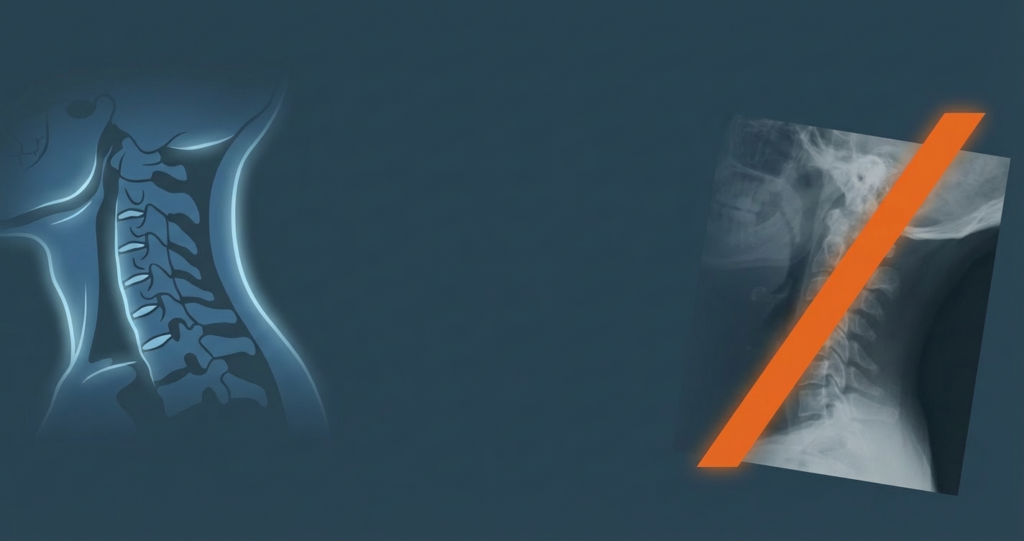
Beyond the X-Ray: Why Absence of Evidence Is Not Evidence of Absence in Whiplash and Low-Velocity Collision Injuries
Introduction: The Patient Who Looks Fine on Film I've sat across from patients who hand me their imaging reports with a mix of relief and frustration. Relief, because nothing looks broken. Frustration, because they're still…
Read more →
When the Bumper Holds, the Spine Pays
Direction and history matter more than speed — an evidence-based analysis of rear-end collision injuries, spinal biomechanics, and…
Read more →
The Collision Nobody Takes Seriously
It happens thousands of times a day across the United States. Two vehicles meet at low speed —…
Read more →Shoulder Rehabilitation After Motor Vehicle Accidents: Evidence-Based Protocols for SLAP Lesions, Labral Tears, and Bicipital Tendinitis
Shoulder Rehabilitation After Motor Vehicle Accidents: A Doctor's Guide When Sarah walked into my office three weeks after…
Read more →
Why Your Neck Hurts But Your Shoulder Blades Feel the Pain
Sarah reached behind her back, trying to knead out the burning knot between her shoulder blades. "It's killing…
Read more →
Cervicogenic Headache: A Comprehensive Clinical Review
Definition and Epidemiology Cervicogenic headache (CGH) is a secondary headache syndrome in which pain arises from the cervical…
Read more →SB 623 Explained: What California's Uber Deal Means for Lien-Based Care
SB 623 limits what an injured person can recover for lien-based treatment when the claim is against Uber,…
Read more →
Crash Injury Mechanics, Causation, and Documentation in Personal Injury Cases
Fundamental Physics Principles Force = Mass × Acceleration (F = m·a) is the foundational law governing crash dynamics and…
Read more →
Legal Memorandum: Inapplicability of Common Fund Doctrine to Private Lien-Based Medical Providers in California
This memorandum explains why the common fund doctrine does not legally compel private lien-based medical providers, such as chiropractic clinics, to…
Read more →
The Truth About AI and Clinical Notes in Chiropractic EMRs: State of the Art in 2025
AI can lighten chiropractic documentation when used with guardrails. I capture encounters by voice, transcribe, then have AI summarize strictly from the transcript, remove value‑laden words, and add human sign‑off. This workflow reduces typing, improves completeness, and stays med‑legal
Read more →